Blog

What Children Teach Us About Reading and Curiosity

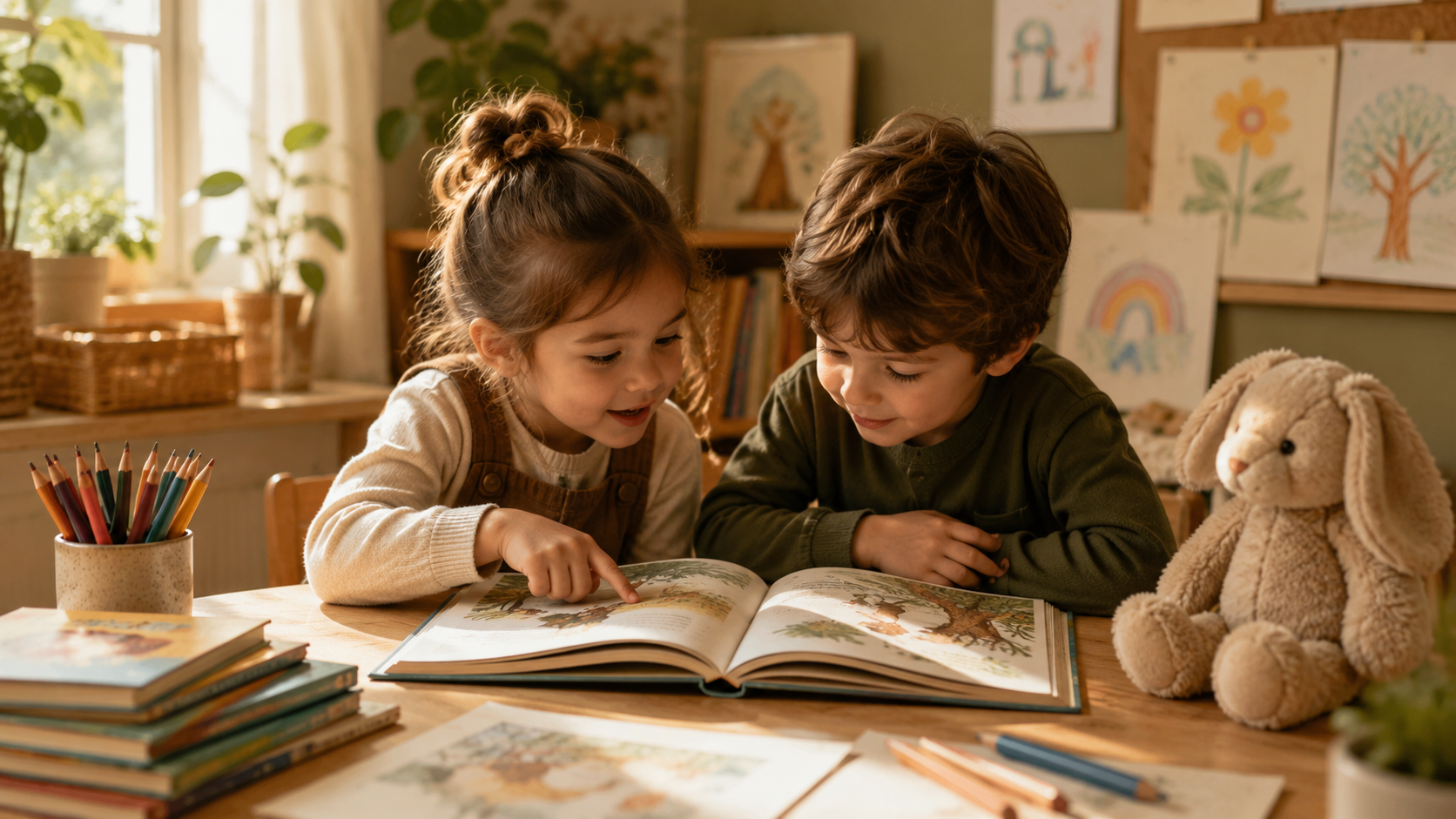
Years of working with preschoolers have strengthened my belief in the importance of reading, listening, questioning and expression. Children remind us that learning begins with curiosity. Books can nurture that curiosity and create spaces where children feel free to imagine, wonder and ask questions.

Children remind us that learning often begins with curiosity. They want to know why things happen, how something works and what might happen next. Their questions may seem simple, but they often reveal a genuine desire to understand the world around them.

Reading can play an important role in nurturing this curiosity. A story introduces children to new places, people, ideas and situations. It gives them something to think about and encourages them to connect what they read with what they already know and experience.

Books also create opportunities for imagination. When children listen to or read a story, they begin to picture the characters, places and events in their own minds. This freedom to imagine allows them to become active participants in the story rather than simply receiving information.

Listening is equally important in this process. When children listen to stories, they learn to follow ideas, understand emotions and pay attention to the experiences of others. Listening also teaches patience and helps children develop the ability to engage with thoughts that may be different from their own.

Questioning naturally follows reading and listening. A child may ask why a character behaved in a certain way, what might happen next or whether the story could have ended differently. These questions show that the child is not merely hearing words but actively thinking about them.

Expression is another important part of learning. Children need spaces where they can share what they think, feel and imagine. They may express themselves through words, drawings, play, movement or conversations. Each of these forms of expression allows them to make sense of their experiences.

Working with preschoolers has also shown me that learning does not always have to happen in a fixed or formal way. Sometimes the most meaningful learning begins with a story, a question, an observation or even an unexpected conversation. When children are given the freedom to explore, they often discover ideas in ways that adults may not have planned.

Books can therefore become more than tools for learning to read. They can become starting points for conversations, creativity and discovery. A single story can lead to questions about friendship, nature, family, emotions or the world beyond a child’s immediate surroundings.

For me, children continue to be a reminder that curiosity should remain at the heart of learning. Reading, listening, questioning and expression are deeply connected, and books can bring all of them together. When children are given the freedom to imagine, wonder and ask questions, learning becomes not only meaningful but also joyful.

Why Reading Still Matters in a Distracted World

In a world filled with quick and temporary distractions, reading asks us to slow down and be present. A good book engages our attention, imagination and thoughts while opening the door to meaningful conversations. Reading is not simply an activity; it is an experience that continues to shape us.

A good book demands our presence. We cannot truly experience it while being completely distracted. We need to follow the words, understand the characters and connect one thought to another. This kind of attention is becoming increasingly valuable because it allows us to pause and be fully involved in what we are doing.

Reading also strengthens our imagination. A book does not show us everything directly. It gives us words, descriptions and ideas, and our minds create the rest. We imagine the places, people, emotions and situations in our own way. This makes reading a deeply personal and creative experience.

Another important part of reading is reflection. Sometimes a sentence makes us stop and think. Sometimes a character’s decision reminds us of something from our own lives. Books create these quiet moments where we can question our thoughts, beliefs and experiences without feeling rushed.

Reading also allows us to enter worlds that are very different from our own. Through books, we can experience different cultures, lives, struggles and perspectives. We begin to understand that people can see the same world in very different ways. This can make us more thoughtful and open in the way we understand others.

In a distracted world, books also provide a kind of mental space that is difficult to find elsewhere. Reading can create distance from the noise around us. For a while, we can leave behind constant notifications and demands and simply spend time with an idea or a story.

Books often become starting points for meaningful conversations as well. When we discuss something we have read, we are not just repeating the story. We are sharing interpretations, asking questions and listening to how someone else understood the same words. These conversations can deepen both our understanding of the book and of each other.

Reading is also connected with patience. Not every book reveals its meaning immediately. Some ideas develop slowly and require us to stay with them. Learning to remain curious even when something is difficult or unclear can be valuable far beyond reading itself.

Perhaps most importantly, reading gives us time to think for ourselves. Instead of constantly reacting to quick pieces of information, we can examine an idea more carefully. We can agree with it, question it, challenge it or allow it to change our perspective.

For me, this is why reading continues to matter. It is not simply an activity or a way to pass time. It is an experience that encourages attention, imagination, reflection and conversation. In a world that constantly asks us to move faster, reading reminds us that sometimes slowing down is exactly what we need.

From Childhood Stories to a Lifelong Love of Reading

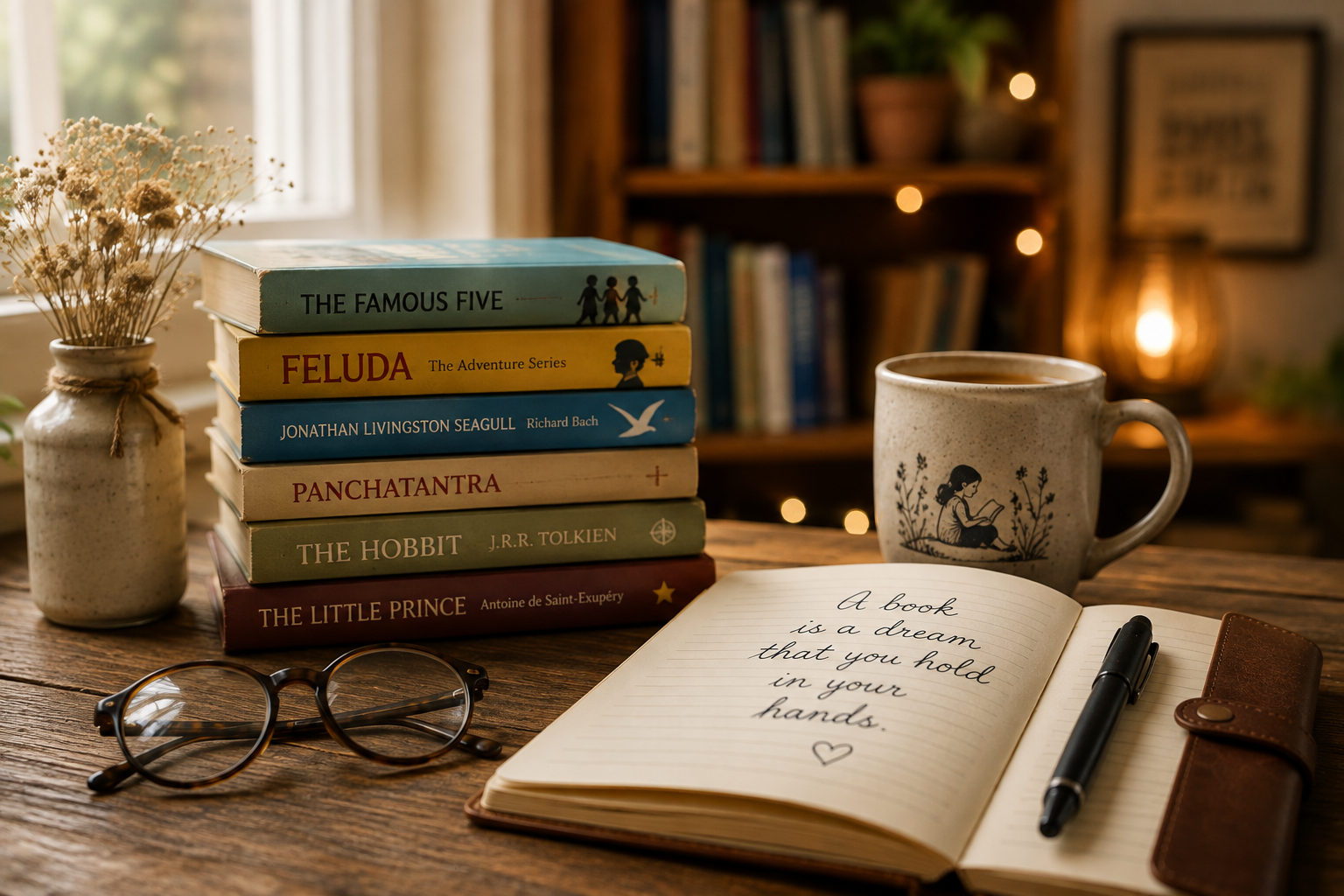
My journey with books began with stories read by my mother and grew through adventures like The Famous Five and the mysteries of Feluda. Over time, books became more than entertainment. They became companions that encouraged me to think, question and understand the world differently.

As I grew older, I began exploring books on my own. School libraries became places where I could discover new characters, adventures and ideas. Reading slowly became more than just a pastime. It became something I genuinely looked forward to and enjoyed spending time with.

One of the most memorable parts of my childhood reading was The Famous Five. Their adventures filled my imagination with mystery, friendship and excitement. Each story made ordinary places feel full of possibilities and encouraged me to look at the world with curiosity.

Then came the mysteries of Feluda, which brought a different kind of excitement. These stories made me observe details, think carefully and try to solve the mystery along with the characters. I started understanding that reading could also be an active process of questioning, analysing and discovering.

As the years passed, my choice of books naturally changed. I still enjoyed stories, but I slowly became interested in books that made me think beyond the plot. I began looking for ideas, emotions and questions hidden within the words.

Books such as Jonathan Livingston Seagull opened another dimension of reading for me. They encouraged me to think about freedom, individuality, learning and the courage to follow one’s own path. I realised that some books stay with us long after we finish reading them.

Over time, books became much more than a source of entertainment. They became companions during quiet moments and guides during moments of reflection. They helped me understand different people, perspectives and experiences that were very different from my own.

Reading also taught me the importance of asking questions. A good book does not always provide simple answers. Sometimes it challenges what we believe and encourages us to look at familiar things differently. That process of questioning has become one of the most valuable parts of reading for me.

Another important part of my reading journey has been sharing books and ideas with friends. Conversations about books often reveal perspectives that I may not have noticed on my own. Reading becomes even more meaningful when thoughts, interpretations and questions are shared with others.

Looking back, my journey with books has grown from childhood stories into a lifelong relationship with reading. From stories read by my mother, to The Famous Five, Feluda and books that encouraged deeper reflection, every stage has shaped the way I think and understand the world. Even today, opening a new book still feels like beginning another journey.